Easter People

On Easter Day, things have moved on from the last blog in which we remembered the path of suffering which Jesus trod in his final days. The betrayal and denial by friends who just hours before had shared supper together, his arrest, rigged trial and execution at the hands of the state and religious leaders, a downward pathway of powerlessness, suffering and pain, which he met with love, arms open wide. On Easter Day everything changes, because Jesus is alive.

The resurrection shows and establishes once and for all that love is triumphant. God was never absent and has been there throughout. Though the darkness was very real, the light has not been extinguished, and never will be. The Easter message of hope is that not only can we survive the downward path and the pain in our lives, but that through the love and presence of God we rise up and grow from the tragedies and failures of our imperfection. This is the story of addiction recovery. This is the story of those who follow the way of Jesus. This is our story.

So, as Pope John Paul II said, “Do not abandon yourselves to despair. We are Easter people and hallelujah is our song.” May the light of Christ, rising in glory banish all darkness from our hearts and minds.

Powerlessness

At St Nicholas Cathedral in Newcastle upon Tyne, England there is a stained-glass window depicting the last supper. It is about 140 years old. In the picture, Jesus is surrounded by his disciples, all blessed with handsome features and dressed in bright colours with gold halos above their heads. In stark contrast, Judas, his betrayer, is wearing a dark coloured cloak, has an ugly face, flame coloured hair and holds a bag of money in his grasping left hand. Most telling of all is the black halo above his head.

Judas has long fascinated me. Not with the aim of excusing him or trying to rehabilitate him but to understand what lay behind the decision to betray his friend and once he had, what options remained. A previous blog has looked at this (Pathways: Restoration instead of Despair; April 2020). What has intrigued me this Easter is less about the pathway of Judas, and more about Jesus and how he coped with the betrayal by his friend and his experience of increasing powerlessness through this betrayal as he journeyed from arrest to trial and execution.

Throughout his life, Jesus consistently showed the way of love – to all those he met along the way and most especially to his close group of twelve disciples with whom he spent the final three years of his life. At the last supper he shows this love in a symbolic act of service when he first washes their feet and then shares in a meal where he talks of his impending death. He knows Judas is about to leave and betray him and Judas knows Jesus knows, yet he still does it. The love of Jesus reaches out, but he is powerless to stop Judas. Love is like that. The families of addicts know this only too well. How many parents, children or partners of addicts have loved and reach out in love, desperately hoping that this will be enough to draw their loved back to sobriety, back to sanity, back to them. But they are powerless to stop them, all they can do is love, and that brings with it immense pain and sorrow.

In the story of the last supper, John responds to Jesus’ prediction of betrayal at the hands of one of their number by asking him who it will be. Jesus indicates that it is Judas. Throughout the gospels, the disciples seem to display a high level of crassness and misunderstanding about whatever Jesus says and I’ve always assumed that in this instance John, (and probably Peter too who overheard what Jesus said about betrayal) simply didn’t understand what he meant. But on reading the story again, it now seems obvious that this wasn’t the case; they did understand, yet they did nothing. This is shocking. The anguish which Jesus felt about Judas’s impending betrayal must have been compounded by an immense sense of bewilderment and perhaps an even greater sadness that Peter, John and any others who’d overheard the conversation did nothing to stop Judas. He’d loved them all fully yet at this point, each of them betrayed Jesus in some way by their indifference and passivity.

Soon, as the story shifts to the arrest of Jesus and his trial, Jesus becomes physically powerless in the hands of the Roman authorities, initiated and urged on by the religious leaders. But at this point he is experiencing a different sort of powerlessness – his powerlessness to influence and change the people he knew and loved. We know that this is not the end of the story and that ultimately, they do change – that is, everyone but the tragic Judas who takes his own life before the love of Jesus can finally break through. But today, Maundy Thursday we stay with Jesus and stand in solidarity with all whose love is powerless to change the behaviour or circumstances of someone they love. Despite everything – the hurt and sadness, the suffering and confusion, the rejection, doubt and despair, they stick by their loved one and continue to offer them love and hope. We give thanks for these people.  We pray for them too because they continue to love against all the odds. Love is never easy and it’s costly, but ultimately, it’s the only way to bring healing and life to others and to ourselves too, remembering that we love because God first loved us. Whether we know it or not, it’s this love of God which helps us to keep on loving others.

Ring Out, Wild Bells

Ring out, wild bells, to the wild sky,
The flying cloud, the frosty light:
The year is dying in the night;
Ring out, wild bells, and let him die.

Ring out the old, ring in the new,
Ring, happy bells, across the snow:
The year is going, let him go;
Ring out the false, ring in the true.

Ring out the grief that saps the mind
For those that here we see no more;
Ring out the feud of rich and poor,
Ring in redress to all mankind.

Ring out a slowly dying cause,
And ancient forms of party strife;
Ring in the nobler modes of life,
With sweeter manners, purer laws.

Ring out the want, the care, the sin,
The faithless coldness of the times;
Ring out, ring out my mournful rhymes
But ring the fuller minstrel in.

Ring out false pride in place and blood,
The civic slander and the spite;
Ring in the love of truth and right,
Ring in the common love of good.

Ring out old shapes of foul disease;
Ring out the narrowing lust of gold;
Ring out the thousand wars of old,
Ring in the thousand years of peace.

Ring in the valiant man and free,
The larger heart, the kindlier hand;
Ring out the darkness of the land,
Ring in the Christ that is to be.

By Alfred Lord Tennyson

Hope at Christmas

This guest contribution is written by Revd Pauline Shelton

‘‘God wants us to know that God loved us before God even made us, and this love has never diminished and never will. Powerful truths written by Mother Julian of Norwich, a remarkable woman who lived around 750 years ago in Norwich, England at a time of plague, riots and war with France — some things never change! That’s what God wants us to know — love, love and more love.

Really? You may be thinking. Where have you been this last year? Don’t you realise how awful2022 has been? There’s war in Ukraine — and a madman in the Kremlin. In Pakistan, floods devastated a third of the land. In Somalia, drought threatens the lives of millions, whilst rising sea-levels threaten the very existence of small oceanic countries. And closer to home, we have Covid, avian flu, and ‘normal’ winter flu, not to mention strikes — while figures show that the gap between rich and poor in Britain is wider than ever. In 2021, the richest 10% of households owned 44% of all wealth, while the poorest 50% owned just 9%. Scandalous. And more and more people are driven to food banks and to desperation.

But I refuse to despair. I won’t give way to the prevailing discourse that all is just getting worse and worse, even though that is how it often feels. Why? Well, it’s summed up in a verse at the start of John’s Gospel – ‘The Word became flesh and lived among us’. The literal translation of that is, ‘The Word became flesh and pitched his tent among us’. Only the very poorest live in tents. Tents are rarely permanent homes. They offer very little protection from the weather, or from thieves. God chose not only to become human, but to live among us in a marginal and vulnerable place — in temporary accommodation, in a tent on the edge of society.

And that’s summed up in the word ‘incarnation’. Incarnation means this extraordinary truth that God becomes human. And though at Christmas we may bless a crib or sing carols about mangers, shepherds and angels, the hope that I want to share with you isn’t just about a massive baby-fest. It’s not just confined to Bethlehem, and winter snows, stars and stables, beautiful and moving though all of that is.

Incarnation is about a change in the very heart and mind of God. It is about God deciding no longer to remain distant from the vulnerable world, the mess and fears and muddle and disease of the flawed and fallible people created and loved by their Maker. Instead, incarnation is about God deciding to enter into the midst of our tensions, our political injustices, our poverty and need — to enter into solidarity with wonderful and broken humanity.

It’s as if God said, ‘What if . . .?’

What if, instead of staying within the boundlessness of eternity, I accept the limitations of time and space?

What if, rather than be a disembodied Spirit, I limit myself to the physical body and intellectual capacity of a human being?

What if I come to earth not as the super-gifted child of an aristocratic family, but am parented by people who have no status, no secure home?

What if, rather than being educated at an exclusive fee-paying school, I learn about life through 30 years of anonymity?

What if, instead of being Superman, I make myself vulnerable — vulnerable to pain, to prejudice, to slander, to disease, and to the loss of credibility because of what I say and who I mix with?

What if, instead of choosing elite graduates from Oxford, Cambridge or Ivy League Universities I pick my companions from a random group of tradespeople, unskilled workers, social misfits — and at least one who is totally untrustworthy?

What if, rather than repeating safe cliches as a tele-evangelist, or from the safety of the pulpit six feet above contradiction, I talk face-to-face with real people about the forgotten and disregarded truths about life, faith and social justice in ways that will make religious people so angry that they’ll plot to kill me?

What if all I say and do to save the world by my life, my love and my example leads to hatred and rejection? And what if, rather than returning to the safety of heaven, I accept death, crucifixion — a sentence reserved for those whose love, honesty and integrity are too much for the powers-that-be to bear?

And what if, when I am dead, I don’t stay lying down?

What if that is what Christmas is really all about? And what if we see again this Christmas that Jesus comes among us, not to fix everything as if by magic, but to be in total solidarity with us. To be with us in all the messiness of our lives. To be part of the joys of today and tomorrow — and a part of the tensions and anxieties too. Jesus comes to be part of those, and to show us a truer way of being human. The incarnation is God’s limitless love enfleshing that love into the form of a human being, Jesus the Christ. The one born as a baby who pitches his tent in our garden, our yard, our street, our lives — so that incarnation keeps on happening, love keeps on flowing down the ages, always abundant, always pouring from the very heart of God.

Our grief, our pains, our troubles, our addictions, our worries, our loneliness are not the end. Thanks to what starts at Christmas they can be the birth pains of something unspeakably better.

‘The Word became flesh and blood and pitched his tent among us.’

‘‘God wants us to know that God loved us before God even made us, and this love has never diminished and never will.’

May the life of the Christ-child given for this broken and beautiful world be born anew in us this Christmas and always.

With grateful thanks to Revd John Bell, Minister in The Church of Scotland and until recently a member of the Iona Community for his idea of the “What if..” within both Advent and Christmas.

Compassion

There’s a marked absence of compassion in UK government policy right now. Whether it’s in the heartless plan to send UK asylum seekers 4000 miles away to Rwanda for processing and residency or the progressive removal of mobility allowances from many disabled people, the tardy provision of visas for Ukrainian families fleeing warfare and violence or the lack of concern for the poor as fuel prices and the cost of living spirals upwards (two thirds of the British cabinet are millionaires), there is a coldness and disregard for those less fortunate who suffer. I suspect that this does not reflect the sentiments of the British people either, but like so much political rhetoric it’s dressed up as a necessary requirement for the times in which we live, peddling the lie that there’s not enough to go round.

I make no apology for this political introduction, because at Easter we have been reminded once again how political expediency works, with the unholy alliance of the Roman occupying forces, their puppet king and the Jewish religious leaders requiring the death of Jesus for daring to challenge what they stood for. His challenge was to offer an alternative way, where achievement, affluence and appearance were not the dominant values. Right at the heart of this alternative way of living is compassion; in the Kingdom of Heaven, loving God and loving others is supreme.

Compassion is central to Twelve Step recovery too, yet another shared hallmark which this blog seeks to highlight. Compassion means “to feel with,” usually in relation to feeling the suffering of somebody else and being moved by that suffering to do something to help them. We’ve talked about mercy in a previous blog (Mercy, Mercy), but compassion is different. Mercy implies some sort of power relationship and possibly the presence of wrong-doing or falling short. Compassion does not have this power dynamic at all – it is simply one human being to another. In the words of William Blake, “Mercy wears a human face, compassion a human heart.”

According to Jesus, compassion is the central quality of a life faithful to God. He tells us to “be compassionate as God is compassionate.” The idea of God being compassionate towards us is potentially life changing. We often think of God as harsh and judgmental possibly tempered by mercy, but compassion means he is alongside us, with a human heart. We are to model this behaviour, and Jesus, the visible image of the invisible God is our pattern or template. There are many instances of Jesus being filled with compassion for somebody – invariably this preceded him healing and restoring them. One of his greatest parables, The Good Samaritan showed us the compassionate behaviour of a traveller who belonged to a despised and outcast race who sees a fellow traveller who has been beaten and robbed and proceeds to rescue and care for him at his own expense. Prior to this the injured man had been ignored by high status people of his own country. In modern day terms, the politician and the priest have passed by with more important things to do, it is the refugee who shows compassion.

Compassion within 12 step recovery is perhaps understandable because every recovering addict has been there too, so can understand the pain and struggle another is going through, both in active addiction and early recovery. People working the programme enter the suffering of other addicts with neither pity nor pride and their caring is frequently both tireless and humbling. It is seen in the way newcomers are treated, which helps them to find a place of emotional warmth and understanding. It is there too in the welcome and acceptance each person receives when attending a new meeting in another place or country. Compassion is woven throughout the programme and is an important factor in the healing, transformational power it holds.

Like gratitude, humility or generosity we must practice compassion so that it becomes an established part of our daily living. The initial “feeling for” someone is often outside our control – we feel pity or sympathy for them without needing to generate it. What we must work at is the response, in which we then do something to help them. Our first reaction is to do something, but very quickly our mind (or other people) tell us it will be too difficult, too costly, too little or just plain misunderstood. We have to practice taking that step to make things better for the person we feel compassionate towards and ignoring the multitude of reasons we might find for not doing so. Remember how life changing it was for us when somebody helped us out of kindness and compassion?

As a friend of mine often reminds me, all of us are wounded, bandaged travellers on the road, sometimes wayward, often lost, invariably pretending that we are okay, but always, always in need of compassion, longing to be free, hungry for heaven. In the words of the Dalai Lama, “love and compassion are necessities, not luxuries. Without them, humanity cannot survive.”

Transformation

I was making some toast for breakfast the other morning when I heard someone on the radio talking about the start of the season of Lent. “Here it is again” he said, “summoning me once more to reflect on and change how I live my life.”  It set me thinking about change.

I remembered a day some years ago when I showed a small group of church leaders around a Twelve Step Day Treatment Centre that I was involved with. They saw the facilities, heard about the programme structure and met with some honest, articulate people in early recovery from alcohol and drug addiction. The visitors seemed to be impressed by the changes these people spoke about and the new spiritual pathway that they were treading.

It turned out that Frank, an Anglican (Episcopalian) priest was not completely convinced and in our closing discussion he aired his doubts. “I can see that their lives have improved for the better compared with when they were drinking or taking drugs,” he said, “but aren’t they just replacing one addiction with another by attending AA or NA meetings all the time instead?”

There were many answers I could have given, but I was beaten to it. Ellie, a Methodist deacon responded quickly with a passionate and perceptive reply.

“Absolutely not,” she said. “Don’t you see Frank, this isn’t just a change, this is transformation. It’s so much more radical.”

The conversation moved on, but I was intrigued by Ellie’s profound answer and talked to her about it later, when the others had left. She elaborated on her comments.

“As I see it, getting into recovery is not a minor adjustment in life and neither is a decision to follow the way of Jesus. They both involve a fundamental change of mind about how we deal with the mess of our lives because the coping strategies we’ve been using are not working and our eyes are finally opened to see it.”

This was certainly my experience and seemed to fit with how twelve step recovery works.  As Step One puts it, “our lives had become unmanageable.” In other words, we’ve got to admit we’re broken before we can begin to be made whole. The change required to do this is a paradigm shift, or transformation as Ellie put it, because it’s not just the addictive behaviour that has to change but our whole perspective and existing assumptions about life too – how we view and react to ourselves, other people, events and everything around us. The same goes for following the way of Jesus. No wonder that’s sometimes referred to as conversion.

“So what about Frank’s assertion that people in recovery are just switching to another slightly less damaging addiction by going to meetings?” I asked her. “I imagine he attends church far more often than most people go to AA meetings but I don’t think he’s addicted to it.”

“I’m sure you’re right,” said Ellie with a laugh. “As I see it, attending AA or Church meetings are only the outward signs of the inner transformation and not the change itself. People attend these meetings because of the inner change and because they help us to commit to and maintain the change by spending time with other like-minded individuals. They can show us how to deal with the damaging addictive behaviour, mistakes, sins or whatever it may be in a different way, one which is far better thought out.”

Again, this rang true for me. I was keen to find out more.

“Transformation is definitely about embracing the new but isn’t it also about letting go of the old ways of thinking and behaving?” I said. “In recovery this is most obviously seen by stopping drinking or drug taking, but really it goes much deeper than this and is about a change in all behaviours. So many people in long term recovery have said to me that after a while the addictive substance or process is no longer the problem, it’s much deeper things like anger, resentment, ego, self-pity and fear which need to be dealt with.”

“Yes,” said Ellie. “Jesus certainly saw the need for this inner transformation, not just in his teaching about a new way of living where we love our neighbour, but in recognising that our problem lies deep within, wrong reactions and conduct come from our hearts and unless these are transformed, everything else is superficial and cosmetic. Time after time in the gospel accounts of his encounters with people, Jesus talked about this deeper, inner transformation which we need to undergo and his offer to help us find this new way.”

“Exactly!” I said. “We let go of the familiar old patterns and enter a new world, the counter-intuitive one of the Sermon on the Mount where we give to receive, we become great by serving and we surrender in order to become free.  Twelve step recovery is full of this counter-intuitive behaviour too, but it doesn’t come easily.”

“It certainly doesn’t,” said Ellie. “Have you read any Richard Rohr?”

“I love his stuff,” I replied, “I’m sure friends of mine get sick of me mentioning him.”

“You may already know this quote then,” she said. “Rohr says something along the lines of spiritual transformation being the process of letting go and living in a confusing dark space for a while, allowing yourself to be spat up on a new and unexpected shore. That’s why Jonah in the belly of the whale is such an important symbol.”

I’d not heard that but I liked it. Going into recovery really is like a period of darkness before entering a new land. Fortunately there are people who’ve now become familiar with that new land who are ready and willing to welcome the newcomers and help them to find their way around. All part of the new life of service. The same goes for those following the way of Jesus. The Kingdom of God that he spoke about is very new and very different from how we naturally think, what we thought we knew and the ways of living that we had become familiar with.

The sound of the toaster popping up brought me back to the present day. The man on the radio was right. We do need to be summoned periodically to reflect on and change how we live our lives, because new places and pathways quickly become routine and familiar. Lent offers us this time for self-reflection, when we dig into the layers of our hearts and minds and find the inner seams of unhealthy thinking and behaviour towards God, others and ourselves and set about correcting them.

I thought about one final comment Ellie had made.

“We can get too caught up in thinking it’s all about us. Whilst we play our part in the process, transformational change is not really about us and what we do. God chooses to ‘co-produce’ it with us as they say these days, so we do play a part, but in the end, transformation is all about God’s grace working in us.” She paused and then laughed. “I’d love to talk to you about grace because it’s one of my favourite subjects, but we’ll have to come back to it another time. My car is on a meter and I really don’t want another parking ticket!”

Sadly, we never did have that conversation about grace but I received an email from her a few days later thanking me for the visit which gave me a flavour of how change and grace are connected. At the bottom of her message there was a quote by Ann Lamott, writer, follower of Jesus and recovering addict. “I do not understand the mystery of grace, only that it meets us where we are and does not leave us where it found us.”

Much as I’d like to be instantly transformed into a new way of love and self-giving, it’s going to be a life-long process. Fortunately, Lent is here again, suffused with grace, to shake me from my lethargy and to challenge me once more to follow more closely in the way of Jesus.
Faithful Friends

A little while ago, someone I knew was going through a difficult time with his drinking. In order to offer him some support and help, I introduced him to a few friends of mine who are recovering alcoholics and part of AA fellowships. I was sure they’d do their best but I was quite amazed by the generosity and kindness they showed him, dropping things they were doing and changing their plans, prioritising his needs and requirements over their own convenience and comfort. They wanted him to get into recovery and to sort his life out and they did their best to help him in ways that he couldn’t do himself, accepting him and his problems, easing his path and making it clear that he was not alone and that he and his life mattered. They were kind, understanding and compassionate, behaving in a way that can only be called loving. When I thanked them, they dismissed it as nothing – or at least only Step 12 stuff of taking the message to others, but their genuine, generous actions touched me deeply.

It reminded me of the story in the gospels of both Mark and Luke where Jesus was teaching a crowd who had come to visit him at the house where he was living. There were so many people that there was no room for anyone else to get in or even stand in the doorway. Along came four men carrying a friend of theirs who was paralyzed and unable to walk. They were desperate to bring him to Jesus so that he could be healed. Undeterred by the large crowd, they carried their friend up to the roof using external stairs and proceeded to dig through the roof in order to create a hole big enough to lower the mat on which their friend lay so that it came to rest at the feet of Jesus. Jesus commended the men’s faith on behalf of their friend, forgave the man his sins and then to prove a point to the critical religious folk watching, healed the man. He doesn’t ask the man whether he has faith, his friends appear to have answered that question already. Their faith was sufficient. This story doesn’t stand alone either, there are many other examples in the gospels where Jesus healed someone because of another person’s faith.

How we care for our friends and our faith on their behalf seems to play a more important part in the process of change than our individualistic way of thinking allows. If we look around us, there is always someone we can help, be it a relative, friend or acquaintance who might require our support and encouragement, who needs someone to believe in them and have faith on their behalf. Strangely, it can often be easier to pray and have faith on behalf of others than it is for ourselves, maybe that’s because this is the way it’s meant to be. As we saw in a recent blog, we’re created to co-operate with one another, not compete. As we turn our eyes towards the needs of others and away from our own personal concerns, our self-obsessed way of thinking begins to reduce, giving becomes more important than receiving and love finally comes to town.

Loving God,

We pray in faith for our friends.

Bring your restoring presence to the dark places in their lives.

Bring your hope to their hearts when they feel defeated.

Bring your love and healing mercies when they are in pain.

Bring them safety and comfort when they are fearful and lonely.

Bring them through this hard time to a new place of freedom and light.

Amen

Competition or Co-operation?

“I’m really grateful for one thing,” my brother said, “Dad taught us to be competitive and go in hard.” We were talking about my father and our upbringing, not long after his death. Even if this statement about him was true outside of the board games we used to play, his contribution was still only a small part of the big lie we are all told many times over, that life is about competing with other people and it pays to be ruthless in doing so. It is only in recent years that I have begun to see this lie for what it is, although changing the way I live is taking a whole lot longer.

From the start I want it to be clear that I’m not talking about winning at school sports, a game of monopoly or pool or even getting a job or wanting the football team you follow to win every match. Neither am I suggesting that wanting to achieve and excel at the things we do as individuals and in groups is wrong. What I am doing is kicking back against idea that absolutely everything in life is about competition and that this is an inevitable part of the evolutionary process. In other words, the notion that we are hard-wired to be competitive and competition is just another way of describing the survival of the fittest. Really? So the rush to get a seat on a crowded train or to be at the front of the dash into a store on the first day of the sales or to stockpile sugar, pasta, or flour is simply our need to provide for ourselves and those we care for? Even if there is a grain of truth in this, it quickly becomes a very unhealthy belief system to operate by, because the reality is that if I get what I want, this invariable results in someone else having less – no seat on the train, empty supermarket shelves and so on. The idea of competition and its alleged evolutionary source can so easily be an excuse or rationalisation for our selfish, greedy behaviour. What’s true for individuals is true for nations too. The current UK government has recently cut its overseas aid budget because it says the UK needs those resources more than other much poorer countries. When it’s got much richer, it will increase its aid budget again. Indeed.

Self-interest dressed up as competition could be seen in the subsistence farming economy of Jesus’s time – if a person accumulated crops in his barn and needed to build bigger barns to hold the grain then it was at the expense of others who had little or went without. No wonder Jesus’s parables often touched on this important area of life. His teachings suggest that we are meant to be in co-operation with God and with one another, not in competition, because there is plenty to go around. As beings created in God’s image, we have rationality and moral principles as our guide, not just survival and reproduction instincts. The early church at least was very much a community which had sharing and caring as its hallmark, following in the way of Jesus. It’s also a key element of recovery –we even talk about the recovery community. It’s not a competition about whose recovery is better or who is a better follower of Jesus.  In the latter case we are all poor at it and the whole point about grace and mercy is that they are freely given to all of us, not just those who earn it or achieve a certain level of merit. And how do we respond to this grace? We serve one another, as Jesus taught us to do and showed in his life as a Servant Leader.

I always remember being moved by the slightly corny yet profound school assembly story of heaven and hell. Both were places with plenty of food but people could only eat using six-foot-long spoons. In hell everyone went hungry because they could not get the food into their mouths but in heaven everyone was full because they fed each other. In 12 step recovery this idea of working together and being non-competitive is perfectly illustrated by the complete absence of hierarchy and positions of status. The emphasis on service is very strong – again the model of Jesus as servant leader, and his counter-intuitive message that to become great we must become the least and the servant of all.

Pushing ourselves and having a competitive spirit isn’t a bad thing but the real lie is that this is what defines us as people. It’s even been said that extreme acts of heroism or altruism are really just self-serving actions, a cynical view of someone’s self-sacrificial act of giving and love for another. Love is what make us truly human and that is what both Jesus’ teachings and 12 step recovery are both about – making us more fully who we are meant to be and less the isolated, fearful, addicted people that the competitive world creates and fuels.

Christmas is a reminder that Immanuel is God with us, not God against us or watching us or even letting us sort it out for ourselves. God is with us, co-operating, working together to make the Kingdom of God a reality, not just seasonal bonhomie but good will to all, now and always.

On the Frontline – learning from Covid

It now feels like a very long time ago that Coronavirus so rudely kicked down the front doors of our comfortable, stable, well-planned lives and unceremoniously marched on in.  At long last, nearly eighteen months later, many of the worst affected countries are finally lifting their lockdowns and easing the various restrictions put in place to limit the virus’s rapid and seemingly relentless spread. It is noticeable, however that this gradual relaxation has been accompanied by signs of the usual human tendency to forget what we’ve been through and the lessons we thought that we’d learned, as we rush headlong to bury ourselves once again in what Heather King calls “the low-level anaesthetic haze of distractions and false gods.” There’s an old Irish blessing which says, “May you never forget what is worth remembering, nor ever remember what is best forgotten.” Maybe now is a good time for us to take stock and reflect on the things that we thought we’d learned during the Covid Pandemic but are now in danger of forgetting. We need to remember what is worth remembering.

Over the first six months of the pandemic there was a lot of talk about both love and suffering. Love was perhaps most clearly seen in the work of many of the frontline health and social care staff whose self-sacrificing care for the ill, lonely and dying went far beyond their job descriptions or professional expectations. Other essential workers, all too often the lowest paid people in our communities served us with immense dedication and love, keeping shelves stocked, food supplied, garbage cleared, fuel flowing and transport running. With schools and workplaces shut, families suddenly found themselves living close to one another 24/7 which required them to discover new depths of love, patience and tolerance. Love was also to be seen in many small acts of kindness for others in need in the community. People looked out for neighbours who were old or vulnerable, significant increases were seen in donations and contributions to local food banks and meal services, help was offered to those who could not manage. Little kindnesses of many sorts abounded. We discovered the truth of Mother Theresa’s words: “Not all of us can do great things. But we can do small things with great love.” Communities flourished and we dreamed of a greener, cleaner, more loving world.

The virus also caused much suffering too. Not just the premature and often painful death of nearly four million people world-wide, but also those who were acutely ill and survived, as well as relatives who suffered as their loved ones died alone and without the opportunity to say a final goodbye. Those who have developed ‘long-covid’ continue to suffer in painful and extreme ways.  Elsewhere, many people with other health conditions suffered from temporarily inferior services and slower treatment as resources were shifted to fighting the virus. And all around us the poor, those in overcrowded living conditions, those in households where there was domestic violence, suffered even more than normal. Some experienced a double or triple whammy of these and other sources of suffering.

The majority of us, may not have experienced such extremes and instead found ourselves stuck in the lockdown hinterland of reduced options, dull routines and loss of purpose as its duration dragged on beyond any of our expectations. We just longed to get back to normal, whatever that new normal would look like. Yet, our eyes had been opened to a global vulnerability, and maybe we’d never have quite the same self-assuredness ever again.

Love and suffering have always been the most significant means by which we achieve spiritual growth. People in recovery know this and Jesus taught and consistently lived this truth. Addiction itself causes “acute and constant” suffering to both the addict and those around them and arguably the turning point is when the prolonged suffering caused by the addiction becomes too great to carry on. As the book Twelve Steps and Twelve Traditions says, “Until now, our lives had been largely devoted to running from pain and problems. We fled from them as from a plague.  We never wanted to deal with the fact of suffering. Escape via the bottle was always our solution. Character-building through suffering might be alright for the saints, but it certainly didn’t appeal to us.”

The road to recovery is painful. The simple fact of living without a substance or process that we have always relied upon and having to stand without it, emotionally naked before the world is hard. Recovery is also painful because it requires change, most significantly the loss of ego which comes from our surrender. But wherever there is pain and suffering, love is usually there too, lurking in the shadows in the form of other people for whom this is a way of living and service. As the Big Book of AA says, “Love and tolerance of others is now our code.” In twelve step recovery, people find themselves drawn to others by acts of love; the duty which begin as a requirement of the programme ultimately develops into a way of life for the individual who gradually becomes loving and giving rather than selfish and taking.

The single most important message of Jesus was that God loves each of us and as a result will do anything to bring us back into his light. Anne Lamott says, “Sometimes I think God loves the ones who most desperately ache and are most desperately lost – his or her wildest, most messed-up children – the way you’d ache and love a screwed-up rebel daughter in juvenile hall.” The two great commandments of Jesus urge us to love the Lord God with all our heart, mind and strength and to love our neighbour as ourselves. No soft, sentimental love this, but a diamond hard centre of being, made so by the intense forces of costly self-sacrifice and suffering. As children of God we are to fill our lives with such love for God and others. Never one to ask anything of others that he did not do himself, Jesus lived this love to the full and experienced the process of dying to self. “Unless a grain of wheat falls into the ground and dies it cannot bear great fruit.” His brutal death brought great love and extreme suffering together in one final cataclysmic yet ultimately triumphant event.

None of this is news to most regular readers of this blog and certainly not to anyone with a strong recovery from addiction or Christian faith. One of the golden threads running through both is that love and suffering are our great teachers. But because we sometimes lose focus and our ego seeks to reassert itself from being in its rightful place and constantly tries to Edge God Out, it always pays to do a spiritual health check on how we’re doing, remembering that we so easily fall prey to self-deception. No time is better for doing this check than right now when things are starting to return to “normal.”

As I’ve said previously in these blog posts, I’m a real coward and will do my utmost to avoid pain and suffering if I can, but I am also a realist who knows it’s a fact of life and that somehow, at some point it will come knocking. In the meantime, whether suffering or not, we can always work at being better at loving others. So, the question is, each day, how can we better love those around us, not just by what we do but also by what we don’t do. Not saying the unkind, uncharitable things but only speaking words that encourage, build up and bring life. Giving the nicest and the best – not just the cheapest or most convenient, sharing the things we hold dear, sacrificing our time, comfort and ease. It’s the kind of love which has no price tag on it. Such love is steady and slow work, changing us without us ever knowing it’s happening. Life may sometimes feel dull or purposeless but the challenge to love those around us means that each day and in every situation, we are all called to be frontline workers. “Did I offer peace today? Did I bring a smile to someone’s face? Did I say words of healing? Did I let go of my anger and resentment? Did I forgive? Did I love? These are the real questions. I must trust that the little bit of love that I sow now will bear many fruits, here in this world and in the life to come.” (Henri Nouwen)

Everything Works Together – interconnected golden threads

The first few pages of Jerome K Jerome’s story Three Men in a Boat, contain a very funny account by the narrator of how he read a medical text book and discovered to his horror that he had the symptoms of every illness and disease he looked at, apart from a mild form of cholera and housemaid’s knee! It’s amusing because most of us can identify with this sort of hypochondria, especially now that we have the internet, with countless medical sites containing descriptions of diseases and symptoms of illnesses, all of which seem to apply to us, when we read about them.

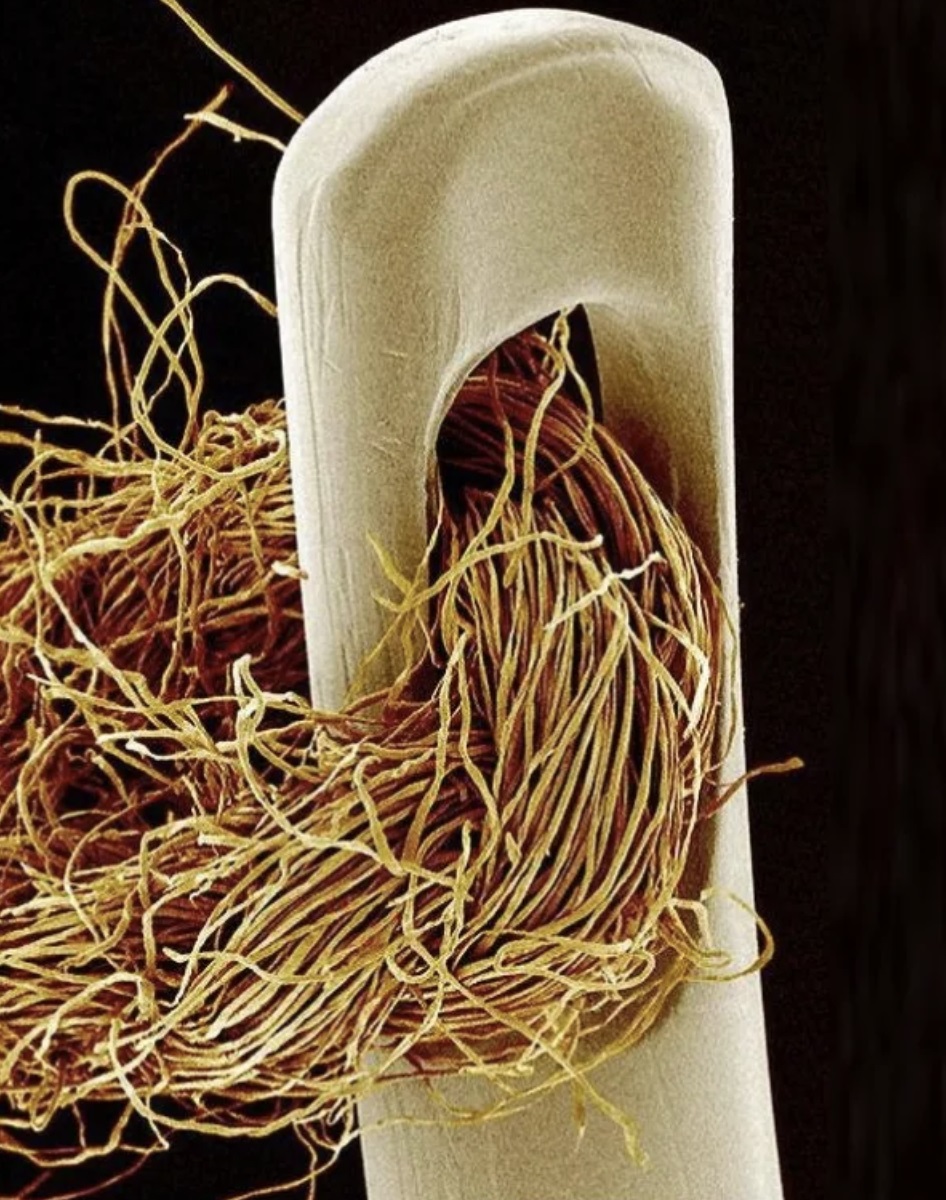
When we think about the themes of Grace, Guilt, Hope, Mercy, Gratitude, Forgiveness and Generosity covered in some of the blogs posted on this site over the last 18 months, there is probably a similar effect. We’ve got problems with every one of them. We feel as if we are constantly in deficit and are not good enough in any department. What became very clear to me early on, as I tried to write about these things on an individual basis, was that whilst they may appear to be separate, they are in fact part of a much bigger, interconnected whole. golden thread - electron microscopeThe Golden Thread of Jesus’ teaching is many separate strands woven together, each with its own shade and lustre which together make the thread as strong and as golden as it is. A photograph of a golden thread seen through an electron microscope as it is passed through the eye of a needle shows clearly that the thread we thought was a single strand is in fact made up of many finer strands. (no wonder it is difficult to thread a needle!)

In reality however, they are more than just interconnected – they are actually interdependent in the sense that there is a dependence between things. For example, if I provide my dog with food and walks and my dog provides me with devotion and happiness, then my relationship with the dog is one of interdependence. Likewise, the individual strands of the golden thread are interdependent, each strand depending on another, which in turn depends on yet another. Thus, there can be no resolution of guilt without forgiveness, and this in turn requires mercy and compassion. The result of forgiveness is often gratitude. And of course, everything, absolutely everything is connected to and held together by love. So, we don’t have to feel despair about how little we may have of these things or what we must “get better at”. Nor do we need to think that we need to work to develop all of these things or set out a regime to “improve ourselves”. They are not ingredients in a cake or bottles of medicine and lotion that need to be taken daily in precise amounts. If I do X and Y then Z will happen. Such a formula would be all about us being in control, a false pathway. Because whilst it may offer some growth, the reality is that the process is much more of a mystery. If we can try to get the conditions right, then growth will happen, and what is amazing is that they all grow, not just one or another. That’s because they’re interconnected and interdependent, both within ourselves and between each other. So, whilst we do have our part to play, maybe by practising gratitude for 30 days, dealing with our resentments and forgiving or perhaps actively seeking to be more loving, after that it’s not down to us at all. As we so often find in the teachings of Jesus, and central to 12 step recovery, it’s all about letting go and letting God. The important lesson here is that spirituality, and the growth of the individual golden threads in our lives is through relationship rather than knowledge or achievement. And the real wonder is that the process of inner growth happens as we seek to serve and bless those around us, because none of the strands of the golden thread are just about us. This is the mustard seed or the yeast in the bread which Jesus talks about. The things which grow silently and miraculously if we let them, in ourselves and the people and community around us. Which once again brings us back to the Kingdom of Heaven, where all things connect, and everything works together for good.

I am still far from being what I want to be, but with God’s help I shall succeed. Vincent Van Gogh

I think we’d like life to be like a train…..but it turns out to be a sailboat. Barbara Brown Taylor

Did I offer peace today? Did I bring a smile to someone’s face? Did I say words of healing? Did I let go of my anger and resentment? Did I forgive? Did I love? These are the real questions. I must trust that the little bit of love that I sow now will bear many fruits, here in this world and the life to come. Henri Nouwen

Through my years of darkness, some spark of spirit remained in me, helped me survive until I found my way into A.A. Then, nurtured by the program, that inner spirit grew, deepened, until it filled the emptiness I had so long felt inside. Step by step I moved to a spiritual awaking. Step by step I cleared up the past and got on with the present. Alcoholics Anonymous, 4th Edition